
How Do You Hire a Remote SEO Marketing Specialist Effectively?

Key Takeaways
- A remote SEO marketing specialist combines search optimization skills with broader marketing context.
- Bridging Search and Strategy: A remote SEO marketing specialist combines technical search execution with broader digital marketing skills, aligning keyword strategy directly with brand positioning and lead generation.
- Prioritize Asynchronous Communication: Remote success relies on strong written communication, self-directed project tracking, and proactive task logging rather than real-time verbal syncs.
- Utilize Scenario-Based Vetting: Evaluate candidates using real-world problem-solving scenarios and small paid trial projects rather than relying solely on polished portfolio metrics.
- Establish 90-Day Ramp Milestones: Set clear monthly checkpoints during onboarding to evaluate task delivery, brand alignment, and technical tool integration.
Introduction
To hire a remote SEO marketing specialist effectively, you need a structured strategy focused on defined deliverables, transparent communication, and technical vetting. Bringing on remote marketing talent allows organizations to scale organic visibility while maintaining operational flexibility. When supported by robust workflows, a distributed specialist acts as a growth driver across your digital channels.
However, remote environments require higher standards for documentation, tool integration, and independent accountability. While pure technical execution can be supplemented by specialized affordable SEO services, a remote search marketing specialist brings the holistic perspective needed to connect search intent directly with buyer journeys, conversion rate optimization, and multi-channel campaign messaging.
What a Remote SEO Marketing Specialist Owns
An SEO marketing specialist sits at the intersection of search engine optimization and digital marketing strategy. Rather than focusing exclusively on server logs or site architecture, they ensure organic content aligns with audience personas and revenue goals.
Core Responsibilities
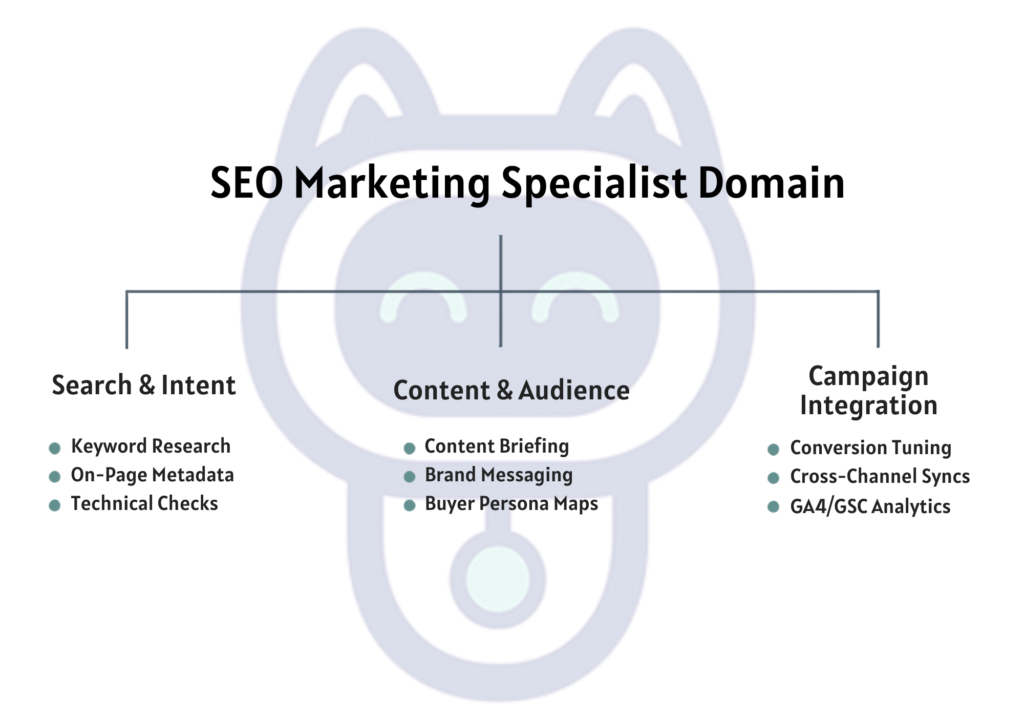
- Search Intent Mapping: Identifying commercial and informational search queries that match buyer journeys across the sales funnel.
- On-Page & Content Optimization: Crafting naturally engaging video and text metadata, restructuring landing page content, and designing user-focused content briefs.
- Performance Reporting & GA4 Analysis: Monitoring organic impression growth, Click-Through Rates (CTR), and conversion pathways to inform ongoing campaign strategy.
- Multi-Channel Integration: Aligning search keywords with paid campaign messaging, social media distribution, and email marketing initiatives.
Evaluating Candidates: Hard Skills vs. Remote Soft Skills
Vetting remote talent requires evaluating technical execution alongside asynchronous communication fluency. Because time zone gaps or remote workflows limit real-time check-ins, written clarity directly influences campaign velocity.
The table below outlines the core hard and soft competencies to look for when reviewing remote applicants:
| Skill Area | Core Technical Competencies | Essential Remote Soft Skills |
| Search & Analytics | Google Search Console, GA4, Semrush, Ahrefs, Screaming Frog | Clear written reporting translating complex search metrics into actionable insights |
| Content Strategy | Keyword clustering, search intent analysis, content gap identification | Proactive task documentation and organized ticket logging in Jira, Asana, or Trello |
| On-Page Optimization | Schema markup basics, internal linking, UX/CRO recommendations | Ability to work independently and ask structured questions upfront to avoid delays |
Companies that lack internal search governance often combine in-house remote marketing hires with comprehensive seo management services to ensure technical site health and quarterly roadmaps remain on track.
Step-by-Step Vetting and Selection Process
A reliable evaluation framework minimizes hiring risks and validates candidate execution capabilities before long-term contracts are finalized.
1. Conduct Scenario-Based Interviews
Present candidates with real-world scenarios to assess their strategic reasoning:
- “How do you approach optimizing an underperforming landing page that has high traffic but low conversions?”
- “What is your process for balancing keyword optimization with brand voice guidelines?”
2. Implement a Paid Trial Task
Assign a short, real-world task—such as auditing a specific site section or drafting two targeted content briefs. Pay the candidate market rates and evaluate their analytical depth, turnaround time, and communication clarity.
3. Assess Asynchronous Communication
Pay close attention to how candidates communicate during the interview stage. Prompt responses, clear formatting, and structured written updates are reliable indicators of future remote productivity.
Organizations seeking high-level strategy alongside dedicated execution often engage external SEO expert services to oversee technical architecture while the remote specialist manages ongoing campaign delivery.
Structuring the First 90 Days for Success
A structured onboarding plan establishes clear expectations and helps remote specialists integrate smoothly into your workflows:
- Days 1–30 (Context & Setup): Grant platform permissions, share audience personas, review brand guidelines, and assign initial task-based optimizations.
- Days 31–60 (Ramp & Execution): Transition the specialist into regular sprint cycles, including monthly keyword mapping, landing page updates, and content brief delivery.
- Days 61–90 (Optimization & Autonomy): Evaluate early performance metrics, refine briefing templates based on output, and grant broader channel autonomy.
Conclusion
Hiring a remote SEO marketing specialist allows businesses to scale organic visibility while keeping operations flexible. By defining clear expectations, prioritizing asynchronous communication skills, and structuring onboarding around measurable 90-day milestones, organizations can build a dependable organic growth engine.
Frequently Asked Questions
What is the difference between an SEO specialist and an SEO marketing specialist?
A pure SEO specialist often focuses heavily on technical audits, crawlability, and server-side optimization. An SEO marketing specialist combines search strategy with broader digital marketing, focusing on audience alignment, brand voice, content creation, and conversion tracking.
How do I measure the success of a remote search specialist?
Track key performance indicators over time, including non-branded organic traffic growth, impression share improvements in Google Search Console, keyword ranking movements, click-through rates, and overall organic conversion rates.
What tools should a remote search specialist be proficient in?
Qualified specialists should be familiar with analytics and research platforms like Google Search Console, Google Analytics 4, Ahrefs, Semrush, CMS platforms (such as WordPress or Shopify), and project management tools like Asana, Trello, or Jira.
How many hours of time zone overlap are necessary for remote work?
Most remote engagements require only 1 to 2 hours of daily time zone overlap for live check-ins. When supported by clear documentation, ticket management, and Loom video updates, the majority of tasks can be completed asynchronously.
Should I hire a remote freelancer or a full-time contractor?
Hire a project-based freelancer if you need specialized task execution or temporary campaign support. Choose a full-time contractor or dedicated specialist if you require ongoing content management, regular reporting, and continuous cross-channel optimization.
Book a Strategy or Discovery Call
Looking to expand your team’s search marketing capacity with clear, structured oversight? We provide data-backed search strategies and guidance tailored to your business goals.
Book a Strategy Call today to review your channel’s search requirements and explore scalable, remote execution options.